A wallet can display a transaction as “confirmed” while the user still has no clear idea what the transaction was designed to do. That is the counterintuitive problem facing many DeFi users: the difficult part is often not signing a transaction, but understanding its likely consequences before signing it. A Rabby wallet extension approaches this problem through a combination of multi-chain access and transaction simulation, making the wallet less like a passive key container and more like a pre-flight instrument for on-chain activity.
Consider a US-based user moving stablecoins between a lending protocol and a decentralized exchange. The transaction may involve a token approval, a router contract, several internal calls, and a change in the user’s asset balances. A conventional wallet may present a contract address and a fee estimate. A simulation can offer a more useful question: if this transaction executes as currently constructed, what appears likely to enter and leave the wallet? That distinction matters, but it does not eliminate risk. Simulation is an estimate of execution, not a guarantee of safety.
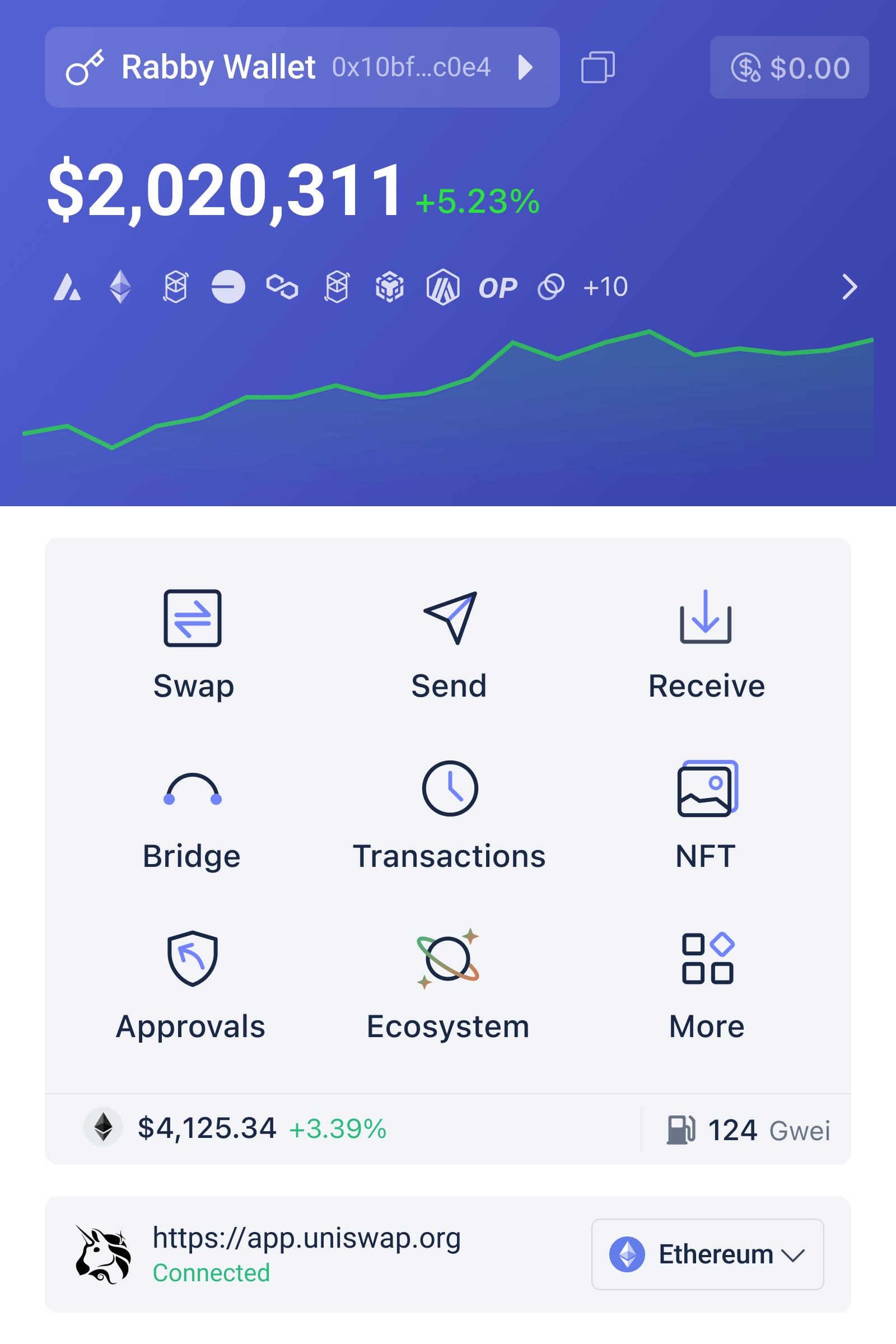
The practical case for transaction simulation
Suppose an Ethereum user wants to swap a liquid token for a stablecoin. The visible action may look simple: select the assets, enter an amount, and approve the swap. Underneath, the wallet may be asked to authorize a spending allowance and then call a decentralized exchange contract. If the user has interacted with several applications recently, the approval may be broad rather than limited to a single amount. The immediate trade is only one layer of the event.
Transaction simulation attempts to make those layers more legible before the signature is produced. Instead of relying only on the transaction’s function name or a shortened contract address, the user may see an estimated balance change, a token approval, or a warning about an interaction that deserves closer inspection. This is especially valuable for DeFi because a single click can trigger a chain of contract calls that are difficult to interpret from raw transaction data.
The deeper insight is that a wallet interface changes the user’s decision environment. Private keys determine who can authorize an action, but interface design influences whether the person understands what they are authorizing. Simulation therefore does not replace custody security; it addresses a different failure mode: informed consent at the moment of signing.
Users interested in testing this workflow should obtain the browser extension only from a source they can verify; the installation guidance is available here. The practical discipline is as important as the software itself: check the publisher, avoid sponsored search results that imitate wallet pages, and never enter a recovery phrase into a browser extension installation form. A legitimate wallet extension should be installed as a tool for signing, not treated as a place to disclose the secret that controls the wallet.
Why multi-chain design changes the risk calculation
A multi-chain wallet lets one interface connect to applications on different networks. For a DeFi user, that can reduce the friction of moving between Ethereum, layer-2 networks, and other supported chains. Yet convenience introduces a subtle cognitive risk: the same token symbol, protocol name, or account address can appear across networks while representing different contracts, liquidity conditions, fee markets, and security assumptions.
Network selection is not a cosmetic setting. It determines where a transaction is executed, which native asset is needed to pay the fee, and which version of a token or protocol the user is interacting with. A balance that looks familiar may be unavailable on the selected chain. A bridge transaction may also create exposure to a separate contract system rather than simply “moving” an asset in the traditional banking sense.
This is where a multi-chain wallet can be useful and dangerous at the same time. A unified interface makes comparison easier, but it can also flatten meaningful differences between networks. A cautious user should ask three questions before signing: Which chain is active? Which contract is receiving permission? What changes should appear in the wallet if the transaction behaves as expected? Simulation can help answer the third question, while the first two still require user attention.
Comparing the main alternatives
General-purpose browser wallets
A widely used general-purpose browser wallet may offer broad compatibility and a familiar experience across decentralized applications. That matters because ecosystem support is itself a form of utility. However, the level of transaction interpretation can vary by application, network, and wallet version. A user may receive a generic request to sign or approve without a clear summary of the economic effect.
The trade-off is straightforward: general-purpose wallets may prioritize ubiquity and integration, while a wallet built around transaction awareness may prioritize richer pre-signing context. Neither approach is universally superior. A user who frequently connects to unusual or newly deployed applications may value additional interpretation more than a user who interacts only with a small set of familiar contracts.
Hardware wallets
A hardware wallet protects private-key operations by keeping key material in a dedicated device. This can materially reduce exposure to certain malware and browser-compromise scenarios. It does not, however, automatically explain what a smart-contract transaction will do. A secure device can still be used to approve a harmful allowance if the user confirms an instruction they do not understand.
For that reason, hardware security and transaction simulation are complementary rather than competing ideas. One addresses the difficulty of extracting the key; the other addresses the difficulty of interpreting the request. The strongest setup for a serious DeFi user may combine a carefully managed signing device with a clear review process, although additional safeguards can also introduce operational complexity and slower execution.
Direct application interfaces and raw RPC tools
Advanced users sometimes interact with decentralized applications through direct RPC calls, command-line tools, or highly technical interfaces. These methods can provide control and transparency for someone who understands calldata, contract addresses, nonce management, and network configuration. For most users, however, they increase the chance of a configuration mistake. Raw visibility is not the same as practical comprehension.
A wallet extension sits between those extremes. It can translate some technical consequences into a more accessible review while preserving direct interaction with decentralized protocols. The limitation is that translation depends on what the wallet can infer from the transaction, the available contract information, and the state of the network at the time of simulation.
Where simulation breaks down
The most important misconception is that a favorable simulation proves that a transaction is safe. It does not. A simulation generally models the transaction against a particular blockchain state. That state can change before the transaction is mined. Prices may move, liquidity may disappear, a contract may behave differently under changed conditions, or the transaction may be routed through components that are difficult to interpret fully.
There is also a difference between execution risk and governance or counterparty risk. A simulation may indicate that a swap will return a particular token amount, but it cannot establish that the protocol’s administrators are trustworthy, that an upgrade mechanism is benign, or that the asset itself will retain value. It may reveal an approval without deciding whether that approval is economically sensible for the user’s circumstances.
Contract analysis can also be incomplete. Complex protocols use proxies, callbacks, aggregators, bridges, and permission systems. A warning may be useful without being comprehensive, and the absence of a warning should not be interpreted as a clean security certificate. This boundary condition is crucial: safety signals are evidence to consider, not a substitute for identifying the application and understanding the permission being granted.
Timing creates another limitation. A transaction may be simulated successfully and then remain pending while market conditions change. On networks with congestion or variable fees, the user may face a different execution price or a failed transaction. A failed transaction can still consume a network fee, while an approval may remain active even after a later swap fails. Users should distinguish between a failed action, a reverted action, and a permission that has already been recorded on-chain.
A reusable review framework for DeFi transactions
A practical review can be organized into four layers. First, identify the network and the application. Second, identify the asset movement: what leaves the wallet, what should arrive, and whether the amount is bounded by a slippage limit. Third, identify permissions: does the transaction approve a token spender, authorize a signature, or interact with a bridge or vault? Fourth, consider reversibility. A simple transfer to the wrong address is generally not recoverable, and a token approval may require a separate revocation transaction.
This framework is more reliable than judging a transaction by its appearance. A small dollar amount does not necessarily mean low risk if the approval is unlimited. Conversely, a large transaction may be appropriate when the destination, allowance, and expected balance change are all understood. Risk is shaped by permissions and reversibility, not merely by the visible trade size.
For users installing a Rabby browser extension, the installation decision should be treated as the beginning of a security process. Create or import an account only through a verified workflow, protect the recovery phrase offline, use a separate wallet for experimentation when appropriate, and connect to unfamiliar applications cautiously. On a US desktop, browser security, operating-system updates, password hygiene, and protection against clipboard replacement remain relevant because a smart wallet cannot defend against every layer of compromise.
What to watch as wallet interfaces mature
The likely direction of wallet design is greater interpretation: clearer balance effects, stronger allowance warnings, more explicit network context, and better separation between routine signing and high-risk permissions. If these tools become more accurate and less intrusive, they could reduce a common source of loss: users approving actions whose mechanics were hidden behind a short button label.
That outcome is conditional, not automatic. Better warnings can produce alert fatigue, and overly confident summaries can create a false sense of security. The useful test is whether a feature helps users ask better questions without implying that the wallet has assumed responsibility for the decision. Future improvements should therefore be judged not only by the number of warnings shown, but by whether the warnings are understandable, timely, and tied to an action the user can take.
Frequently asked questions
What does transaction simulation show in a multi-chain wallet?
It generally estimates how a proposed transaction may affect balances, approvals, and contract interactions before the transaction is signed. The result depends on the current network state and the wallet’s ability to interpret the contracts involved. It is a decision aid, not a guarantee that the transaction or protocol is safe.
Is a multi-chain wallet safer than using separate wallets?
Not by definition. A unified wallet can make network switching and transaction review more convenient, but it can also make different chains appear deceptively similar. Separate wallets may reduce the impact of a mistake or isolate experimental activity, while a multi-chain interface may provide a better overview. The appropriate choice depends on the user’s habits, threat model, and willingness to manage additional operational complexity.
Does simulation replace a hardware wallet?
No. Simulation helps explain a transaction, while a hardware wallet helps protect the private key used to authorize it. They address different risks and can be used together. Neither one proves that a protocol is trustworthy or that an asset will maintain its value.
The durable lesson is simple but easy to overlook: a crypto wallet is not merely a safe for keys. It is also the place where a user interprets an instruction with financial consequences. A multi-chain wallet can reduce friction, and transaction simulation can improve visibility, but responsible DeFi use still depends on verifying the chain, contract, permission, and expected outcome before signing.
Leave a Reply